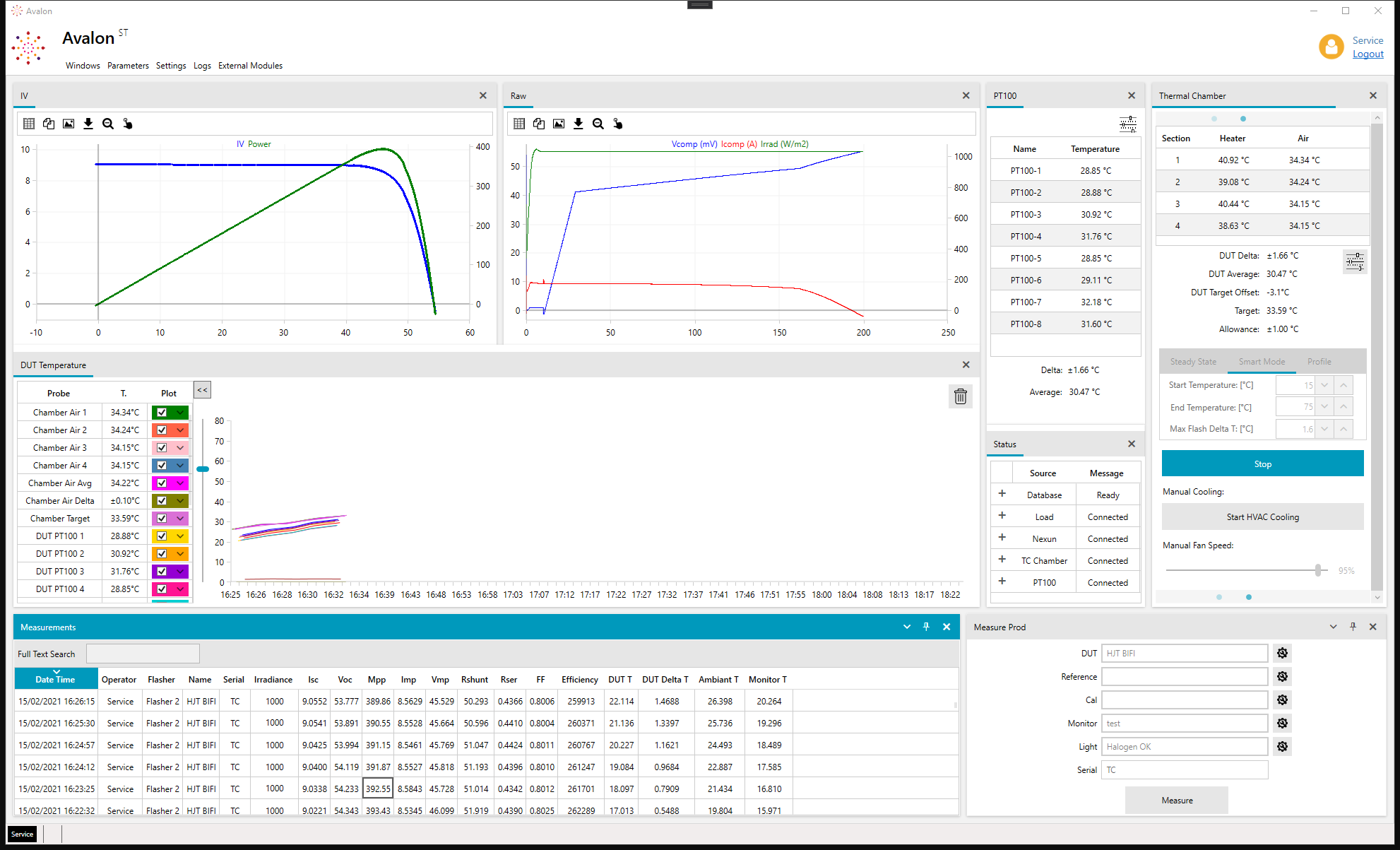
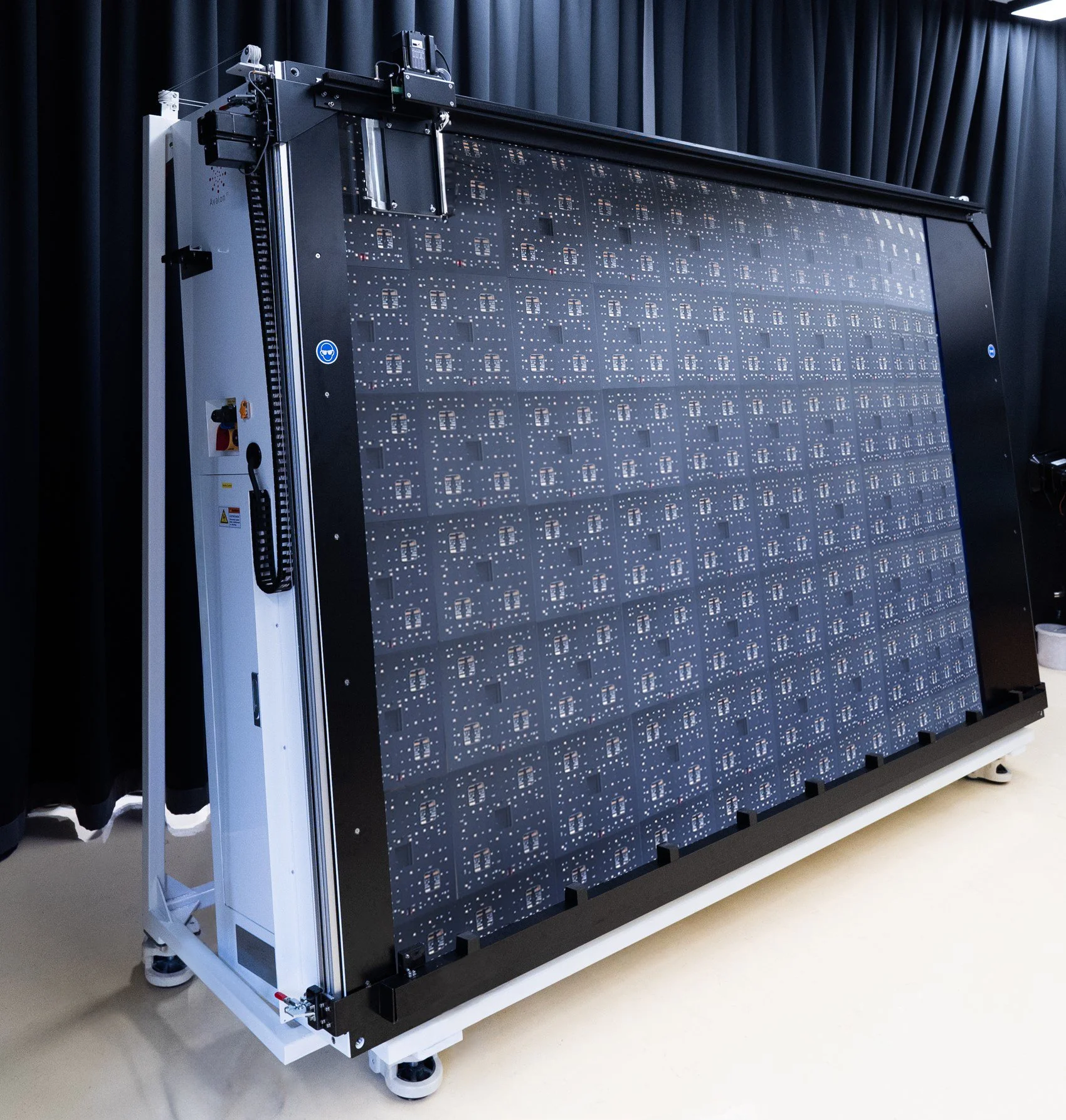
A Nexun PRO is on its way to the University of New South Wales (UNSW) in Sydney, Australia. The system reinforces the measurement capabilities of the country's leading photovoltaic institute, a research center responsible for several world-record cell efficiencies.
UNSW has shaped the modern silicon cell. Its work on PERC, the technology that now powers the majority of installed solar modules, started in Sydney. The same school continues to push HJT, TOPCon, perovskite-on-silicon tandems and the next generation of high-efficiency devices. Giving that team a measurement bench that can keep up with their cells matters.
Why an LED bench, and why now
Avalon's LED solar simulators offer measurable advantages over xenon for advanced research. Spectral match is sharper and adjustable channel by channel. Long-pulse and steady-state operation open up dynamic-IV, capacitive and metastability-aware measurements that pulsed xenon cannot reach. Uniformity is mapped automatically. Energy consumption and lamp-replacement costs drop sharply.
For a research group measuring devices that may not exist in a commercial form yet, those advantages translate directly into better data. Cleaner spectra mean cleaner uncertainty budgets. Adjustable channels mean the simulator follows the cell, not the other way round.
What the system covers
The Nexun PRO at UNSW handles silicon cells and modules at certification-grade A+A+A+ classification, with active area up to 1.8 × 3 m and a 500 ms pulse. The same machine supports the longer pulse durations that next-gen chemistries need, plus the channel-by-channel control required for spectral-response and quantum-efficiency-aware studies.
Working with an institution like UNSW, with deep PV expertise and a long publication record, is a vote of confidence in the LED-class proposition. We are proud to support their mission and grateful to the team that made the delivery happen.