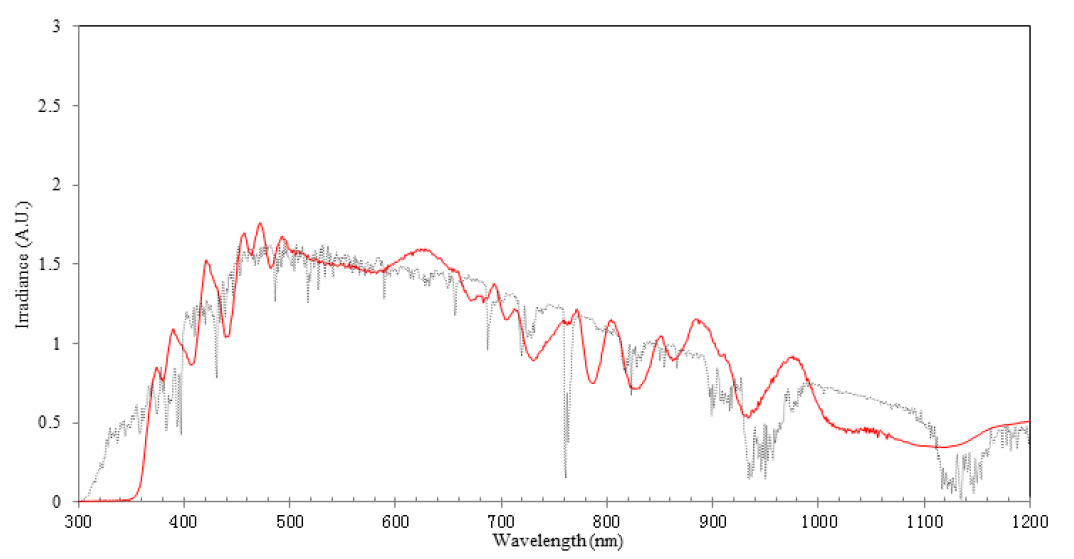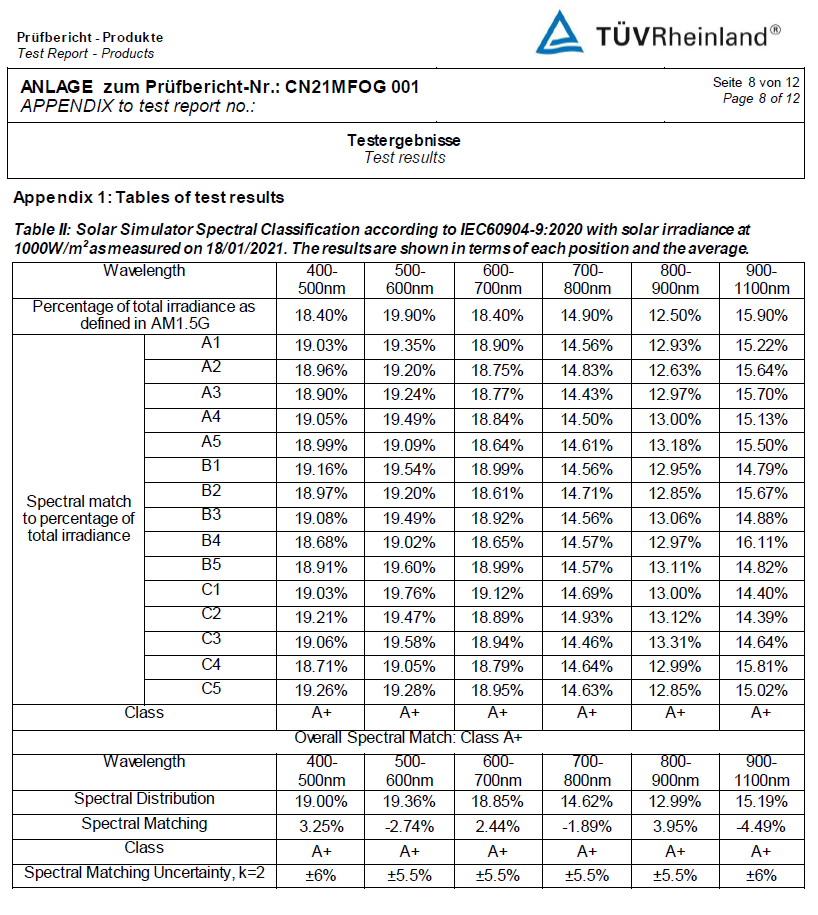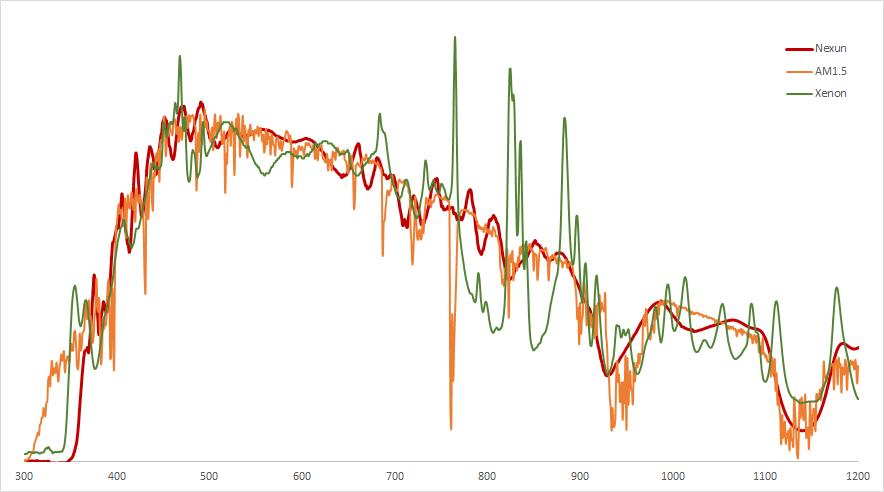
Solar modules are measured against AM1.5G. That is the right rule for benchmarking. Two modules can only be compared if both are measured under the same standardised reference spectrum, and AM1.5G is the agreed reference for terrestrial PV.
But out in the field, AM1.5G almost never happens. Real spectra shift with the time of day, the weather, the latitude and the terrain. Knowing how a module behaves at AM1.5G is necessary, but it does not tell you how it will perform on a roof in Bangalore in October at 5 pm.
What xenon could never do
For decades, measuring a module under anything other than AM1.5G was impractical, because the dominant simulator technology, xenon arc lamps, has a spectrum that is essentially locked at the source. You can filter it, but you cannot reshape it. Spectral characterisation under non-AM1.5 conditions was a long-standing wish list item that no one could economically deliver.
What a modular LED simulator unlocks
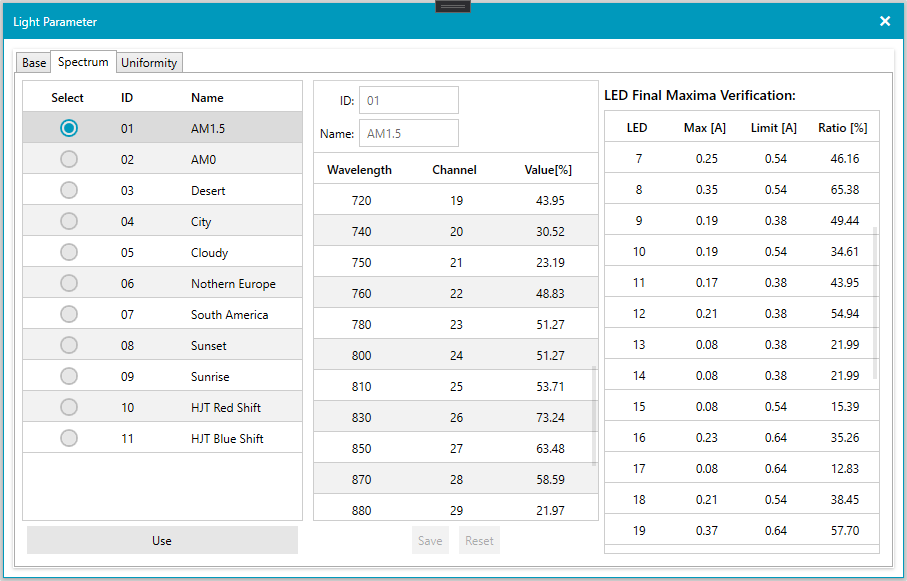
An LED simulator with independently controllable channels can be reshaped. One click and the spectrum becomes morning Beijing in winter, or noon Sydney in summer, or coastal Lagos under haze. The same instrument can simulate different regions, different weather conditions, different times of day, or selectively illuminate one junction of a multi-junction or HJT cell.
What it means for a lab
For a measurement lab, a modular simulator is not just a research tool, it is a service line. Energy-yield prediction, regional acceptance testing, multi-junction characterisation, dynamic-IV under specific spectra, all of these become offerings the lab can sell. Translation: new services, new customers, more revenue per square metre of bench space.