IEC 60904-9 is the standard that classifies a solar simulator's light. It grades three independent properties, and a label like A+++ A++ A+++ gives one grade for each, always in the same order: spectral match, then spatial non-uniformity, then temporal instability. One letter alone tells you very little; the triplet tells you whether a measurement can be defended.
The three grades, in order
- Spectral match: how closely each wavelength band tracks the AM1.5G reference spectrum. Poor match means large mismatch corrections and added uncertainty.
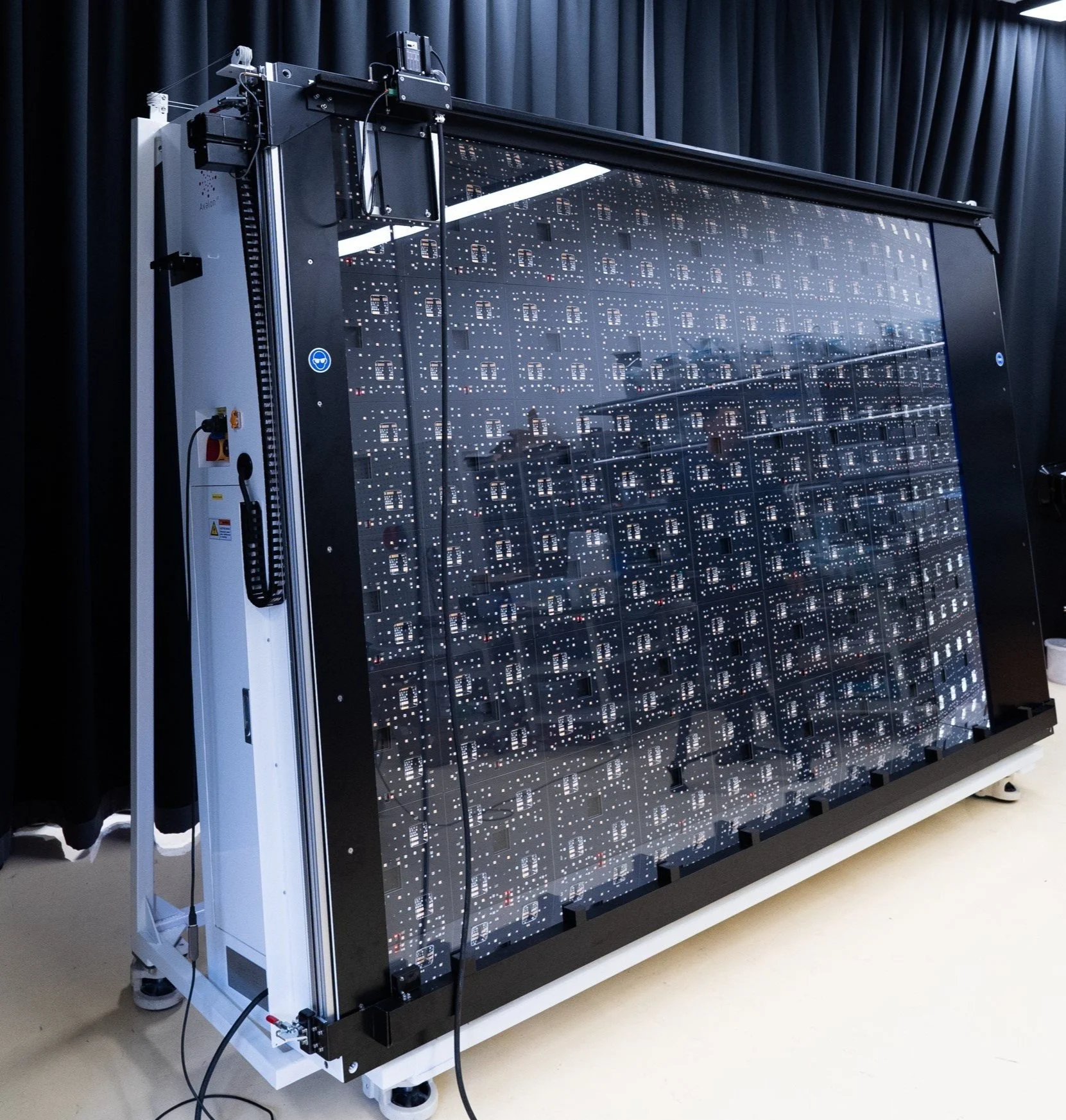
- Spatial non-uniformity: how evenly the test plane is lit. The Nexun ULTRA holds non-uniformity below 0.5%, verified at every cell position by a TÜV-verified uniformity robot rather than a manual scan.
- Temporal instability: how steady the light is during the sweep. Short-term instability (STI) governs the I-V curve itself; long-term instability (LTI) governs flash-to-flash repeatability. ULTRA holds STI below 0.5% and LTI at 0.2% over a 500 ms pulse.
From A to A+++
Class A is the baseline for bankable measurement. The 2020 edition (edition 3) added A+, a tier twice as tight. The industry extends the ladder with A++ and A+++ as shorthand for two and four times tighter than the Class A limit on a given criterion. These extended grades are verified the same way, by accredited measurement against the standard's criteria; they simply report margins the published table does not yet name. The group helped push that ladder: Pasan built the first simulator to reach A+ performance, and Avalon's Nexun ULTRA now reports A+++ A++ A+++, the top of the scale on an LED solar simulator.
Reading a datasheet without being fooled
- Demand all three grades, with the edition of the standard (ULTRA is certified against editions 2 and 3).
- Ask how non-uniformity was mapped: a robotic scan of every cell position is not the same claim as a 9-point manual pass.
- Ask for class at your pulse length: a simulator that grades A+ at 10 ms may not hold it over a 500 ms sweep, which is what capacitive cells need.
Frequently asked questions
- What does A+++ mean on a solar simulator?
- A grade roughly four times tighter than the IEC 60904-9 Class A limit for that criterion. It is the industry's extension of the standard's ladder (A, A+), verified by accredited measurement; the Avalon Nexun ULTRA reports A+++ A++ A+++ across spectral match, uniformity and temporal stability.
- Is A+++ an official IEC 60904-9 class?
- Not in the published table: edition 3 (2020) names A+ as the top tier. A++ and A+++ are the accepted industry shorthand for margins two and four times tighter than Class A, measured against the same criteria.
- What order are the three grades in?
- Spectral match, spatial non-uniformity, temporal instability, always. A+++ A++ A+++ therefore means A+++ spectrum, A++ uniformity, A+++ stability.
- Which solar simulator has the highest IEC 60904-9 class?
- Among LED solar simulators the Avalon Nexun ULTRA reports the top of the scale, A+++ A++ A+++, certified against IEC 60904-9 editions 2 and 3.